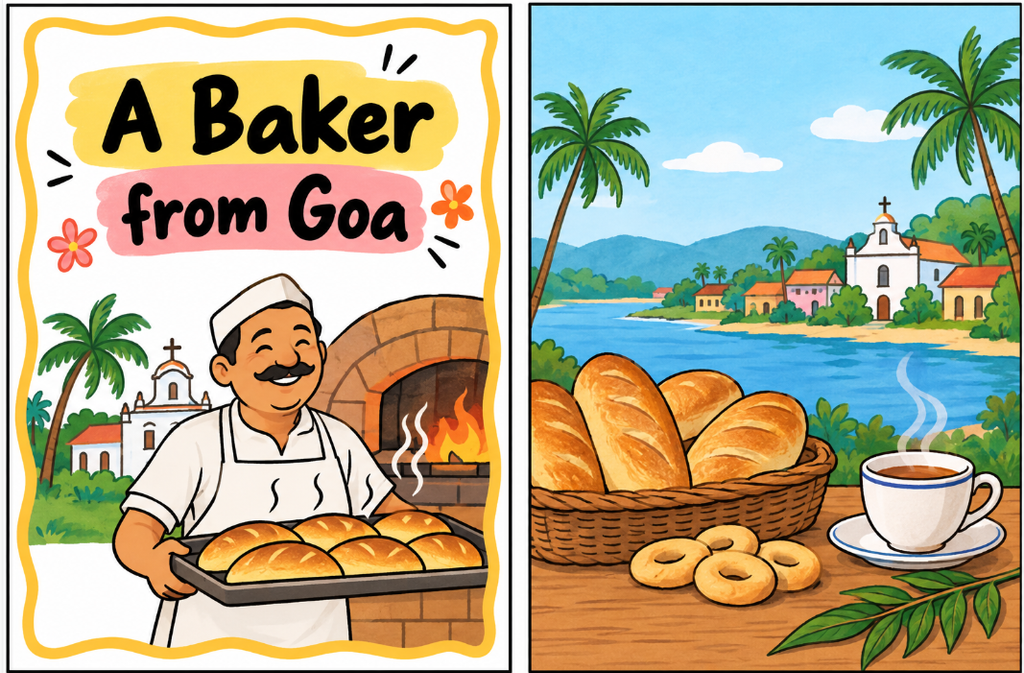
Chapter: Glimpses of India–A Baker from Goa: Complete Assignment with Answers
EXTRACT – 1: A BAKER FROM GOA
Read the extract from ‘A baker from Goa’ and answer the questions.
“I can still recall the typical fragrance of those loaves. Loaves for the elders and the bangles for the children. We then did not even care to brush our teeth or wash our mouths properly. And why should we? Who would take the trouble of plucking the mango-leaf for the toothbrush? And why was it necessary at all? The tiger never brushed his teeth. Hot tea could wash and clean up everything so nicely, after all!”
SET – I
i. Contradict the view that the narrator was careful about oral hygiene as a child.
Answer: The narrator was not careful about oral hygiene as a child. He says that children did not brush their teeth or wash their mouths properly. They also did not use mango leaves as toothbrushes.
ii. Which option best explains why the writer mentions “the typical fragrance of those loaves”?
(a) To show that the loaves were expensive and rare
(b) To express a vivid, nostalgic memory linked to childhood
(c) To suggest that the loaves were healthier than other bakery items
(d) To highlight the reason why only elders enjoyed the loaves
Answer: (b) To express a vivid, nostalgic memory linked to childhood.
Explanation: The smell of the bread reminds the narrator of his childhood. It brings back happy and old memories.
iii. What can be inferred about the narrator’s childhood attitude from the repeated questions like “And why should we?”
Answer: The repeated questions show that the narrator was carefree and playful as a child. He did not think much about cleanliness or dental care. He also used humour while remembering his childhood.
iv. Read the following words and phrases.
- typical fragrance of those loaves
- bangles for the children
- did not even care to brush
- mango-leaf for the toothbrush
- hot tea could wash and clean
Classify them as Cultural Practices or Hygiene Attitude.
Answer:
| Cultural Practices | Hygiene Attitude |
| 1. Typical fragrance of those loaves | 3. Did not even care to brush |
| 2. Bangles for the children | 5. Hot tea could wash and clean |
| 4. Mango-leaf for the toothbrush |
Correct option: (c) Cultural Practices: 1, 2, 4; Hygiene Attitude: 3, 5
Explanation: The bread and bangles were connected with the local culture. The other statements show the children’s attitude towards dental hygiene.
v. How does the mention of hot tea contribute to the cultural setting of the extract?
Answer: Hot tea shows the traditional food habits of the people. It also shows how tea and bread were a normal part of daily life. The reference makes the childhood memory more lively and humorous.
SET – II
i. Which of the following statements best explains why brushing teeth was considered unnecessary in the extract?
(a) People were unaware of the importance of cleanliness.
(b) Traditional beliefs and habits made brushing seem unnecessary.
Answer: (b) Traditional beliefs and habits made brushing seem unnecessary.
Explanation: The children had their own traditional habits. They used mango leaves as toothbrushes and believed that hot tea could clean their mouths.
ii. What can be inferred about the lifestyle of people in Goa during the narrator’s childhood from this extract?
Answer: The lifestyle was simple and traditional. People followed old customs and habits. Food such as bread and tea was an important part of daily life.
iii. What does the humorous reference to the tiger not brushing his teeth convey about the narrator’s tone?
Answer: It makes the narrator’s tone humorous and playful. The narrator gives a funny reason for not brushing his teeth. This also shows that he remembers his childhood with amusement.
iv. Select the option that correctly completes the following sentence.
The extract presents childhood memories in a tone that is primarily:
(a) critical and disapproving
(b) nostalgic and humorous
Answer: (b) Nostalgic and humorous.
Explanation: The narrator remembers his childhood with affection. At the same time, he uses funny examples about brushing his teeth.
v. What is the tone the narrator is UNLIKELY to have used in the line, “Hot tea could wash and clean up everything so nicely”?
(a) Humorous
(b) Boastful
(c) Cynical
(d) Casual
Answer: (c) Cynical
Explanation:The line is humorous and casual. It is not negative or bitter. Therefore, cynical is the least suitable tone. The meaning of Cynical is pessimistic, distrustful.
vi. Infer why the author uses a string of questions in this extract.
Answer: The author uses many questions to show the carefree thinking of children. The questions make the narration lively and humorous. They also show how the narrator tried to give funny reasons for his childhood habits.
EXTRACT – 2: A BAKER FROM GOA
Read the extract ‘A baker from Goa’ and answer the questions.
“Marriage gifts are meaningless without the sweet bread known as bol, just as a party or a feast loses its charm without bread. Not enough can be said to show how important a baker can be for a village. The lady of the house must prepare sandwiches on the occasion of her daughter’s engagement. Cakes and bolinhas are a must for Christmas as well as other festivals. Thus, the presence of the baker’s furnace in the village is absolutely essential.”
SET – I
i. Contradict the view that bread played only a minor role in the social life of Goan villages.
Answer: Bread played an important role in the social life of Goan villages. It was needed at marriages, parties, feasts, engagements and festivals. Sweet bread called bol was also important for marriage gifts.
ii. Which of the following statements best explains the comparison between bread and celebrations in the extract?
(a) Bread was eaten only during special occasions.
(b) Bread was an indispensable element that gave meaning to social gatherings.
Answer: (b) Bread was an indispensable element that gave meaning to social gatherings.
Explanation: The extract says that parties and feasts lose their charm without bread. This shows that bread was an important part of celebrations.
iii. What can be inferred about the status of the baker in a Goan village from this extract?
Answer: The baker had an important position in the village. People needed the baker for marriages, engagements, parties and festivals. His work was closely connected with the social life of the village.
iv. Select the option that correctly completes the following.
“The lady of the house must prepare sandwiches on the occasion of her daughter’s engagement. Cakes and ‘bolinhas’ are a must for Christmas as well as other festivals.”
The above statements suggest that:
(a) Goans waste a lot of food on festivals and special occasions like marriages.
(b) Food is at the centre of all kinds of celebrations in Goan villages.
Answer: (b) Food is at the centre of all kinds of celebrations in Goan villages.
Explanation: Sandwiches, cakes and bolinhas are connected with important family and religious celebrations.
v. What emotion does the account in the extract evoke in the author’s mind?
Answer: The account creates a feeling of nostalgia and affection in the author’s mind. He remembers the old traditions and the important role played by the baker in village life.
SET – II
i. What does the comparison of bread with marriage gifts and festivals mainly highlight?
- The ceremonial importance of bread
- The baker’s central role in social life
- The economic dependence of villagers on bakers
- The emotional value attached to traditional food
- The decline of modern eating habits
Options:
(a) 2 and 3
(b) 2, 3 and 5
(c) 1, 2 and 4
(d) Only 2
Answer: (c) 1, 2 and 4
Explanation: Bread had a special place in ceremonies and festivals. It was also closely connected with the social life of the people. The passage shows the emotional value of traditional food.
ii. What does the statement “not enough can be said” suggest about the narrator’s attitude towards the baker?
Answer: It shows that the narrator has great respect and appreciation for the baker. He feels that the baker was very important to the village.
iii. Select the option that correctly completes the following sentence.
The extract highlights that the baker’s presence was essential because bread was deeply linked to ________.
(a) daily survival alone
(b) social and cultural traditions
Answer: (b) Social and cultural traditions
Explanation: Bread was used during marriages, engagements, Christmas and other festivals. Therefore, it was closely linked with social and cultural traditions.
iv. How does the baker’s importance contrast with the changing times and modern conveniences?
Answer: Even though times have changed and modern conveniences are available, the baker was still important in the traditional life of the village. His bread remained necessary for festivals, marriages and other social events.
v. How does the description of “the lady of the house must prepare sandwiches” reflect societal expectations?
Answer: It reflects the traditional role of women in the family. Women were expected to prepare food for important family events. The sentence shows the social expectations placed on women during celebrations.