E-BUSINESS
Meaning of E- Business
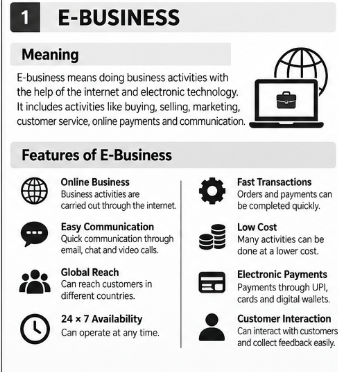
E- Business means doing business activities with the help of the internet and electronic technology.
It includes activities like buying, selling, marketing, customer service, online payments, and communication through electronic devices.
Example: A company selling products through its website and receiving online payments is doing e-business.
FEATURES OF E-BUSINESS
1. Online Business: Business activities are carried out through the internet. Customers and businesses can connect online.
2. Easy Communication: Businesses can communicate with customers and suppliers quickly. Email, chat, and video calls can be used.
3. Global Reach: A business can reach customers in different cities and countries. There is no need to have a physical shop everywhere.
4. 24 × 7 Availability: Online businesses can remain available 24 hours a day. Customers can place orders at any time.
5. Fast Transactions: Orders, payments, and other business activities can be completed quickly. This saves time for both businesses and customers.
6. Low Cost: Many business activities can be done online at a lower cost. The business may need fewer physical offices or shops.
7. Electronic Payments: Customers can make payments through UPI, cards, net banking, and digital wallets. This makes payment quick and convenient.
8. Customer Interaction: Businesses can interact with customers through websites, emails, and social media. Customer feedback can also be collected easily.
ADVANTAGES OF E-BUSINESS
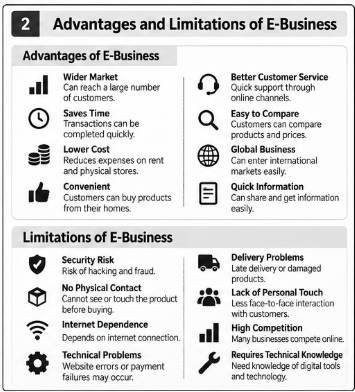
1. Wider Market: A business can sell its products to customers in different places. It can reach a large number of customers.
2. Saves Time: Business transactions can be completed quickly. Customers do not need to visit a physical store.
3. Lower Cost: Online business can reduce expenses on rent, electricity, and physical stores. This can help reduce the overall cost.
4. Convenient: Customers can buy products and services from their homes. They can shop at any time.
5. Better Customer Service: Businesses can provide quick support through online chat, email, and social media. Customer problems can be handled faster.
6. Easy to Compare: Customers can compare different products, prices, and features online. This helps them make better choices.
7. Global Business: A business can enter international markets more easily. It can sell products to customers in other countries.
8. Quick Information: Businesses can quickly share information about products, prices, and offers. Customers can also get information easily.
LIMITATIONS OF E-BUSINESS
1. Security Risk: Online transactions may face risks such as hacking and fraud. Personal and financial information may be stolen.
2. No Physical Contact: Customers cannot physically see or touch the product before buying it. This may create doubts about product quality.
3. Internet Dependence: E-business depends heavily on the internet. Business activities may stop when there is no internet connection.
4. Technical Problems: Website errors, server problems, or payment failures can occur. These problems can delay business transactions.
5. Delivery Problems: Products bought online need to be delivered. Late delivery or damaged products can cause customer dissatisfaction.
6. Lack of Personal Touch: Online business may have less personal interaction with customers. Some customers prefer face-to-face communication.
7. High Competition: Customers can easily compare many businesses online. Small businesses may find it difficult to compete with large companies.
8. Requires Technical Knowledge: Businesses need knowledge of websites, online payments, and digital marketing. Some businesses may find these technologies difficult to manage.
SCOPE OF E-BUSINESS
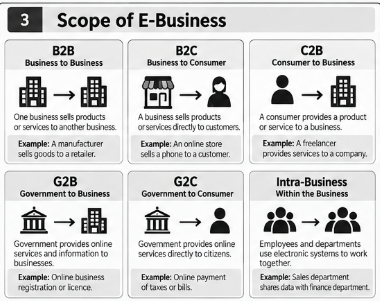
1. B2B: Business to Business
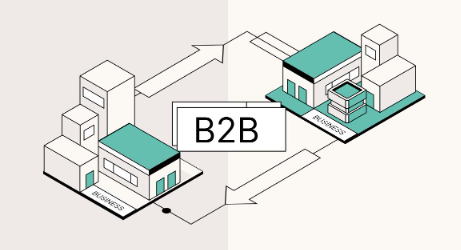
B2B means Business to Business. In this type, one business sells products or services to another business. Both parties use online systems for orders, payments, and communication.
Example:
A manufacturer sells products in bulk to a retailer through an online platform.
2. B2C: Business to Consumer
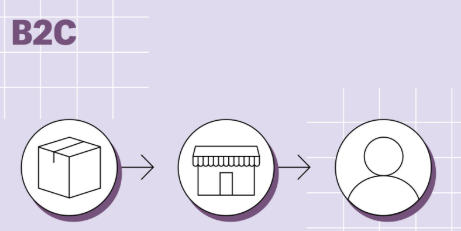
B2C means Business to Consumer. In this type, a business sells products or services directly to the final customer. Online shopping websites are common examples of B2C.
Example:
A customer buys clothes directly from an online shopping website.
3. C2B: Consumer to Business
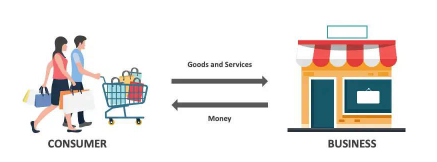
C2B means Consumer to Business. In this type, an individual provides a product or service to a business. Freelancing and online content creation are common examples.
Example:
A freelance graphic designer creates a logo for a company and receives payment.
4. G2B: Government to Business
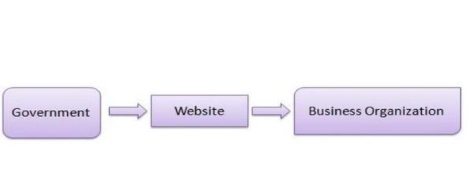
G2B means Government to Business. In this type, the government provides online services and information to businesses. It makes government work easier and faster for businesses.
Example:
A company applies for a business licence through a government website.
5. G2C: Government to Consumer
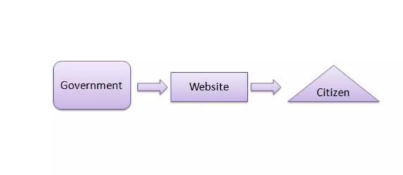
G2C means Government to Consumer. In this type, the government provides online services directly to citizens. People can access many services without visiting a government office.
Example:
A citizen pays a government bill or tax online through a government website.
6. Intra-Business
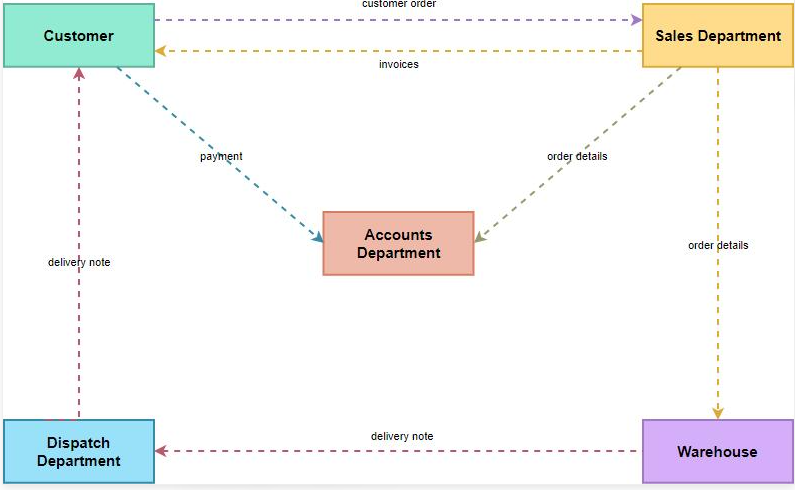
Intra-business means using electronic systems within the same business. Employees and different departments can share information and communicate with each other easily.
Example:
The sales department shares customer information with the accounts department through the company’s internal system.
E-COMMERCE
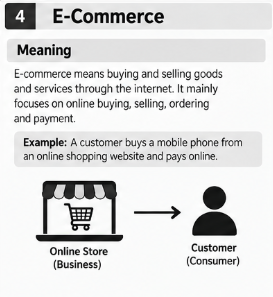
E-Commerce means buying and selling goods and services through the internet. It mainly focuses on online buying, selling, ordering, and payment.
Example: A customer buys a mobile phone from an online shopping website and pays online.
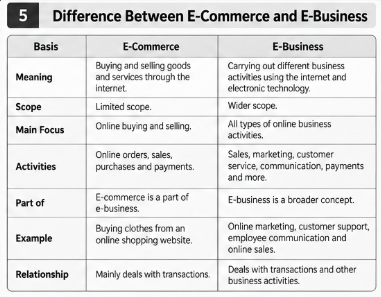
DIFFERENCE BETWEEN E-COMMERCE AND E-BUSINESS
| Basis | E-Commerce | E-Business |
| Meaning | It means buying and selling goods and services through the internet. | It means carrying out different business activities using the internet and electronic technology. |
| Scope | It has a limited scope. | It has a wider scope. |
| Main Focus | It mainly focuses on online buying and selling. | It focuses on all types of online business activities. |
| Activities | Includes online orders, sales, purchases, and payments. | Includes sales, marketing, customer service, communication, payments, and more. |
| Part of | E-Commerce is a part of e-business. | E-Business is a broader concept. |
| Example | Buying clothes from an online shopping website. | Online marketing, customer support, employee communication, and online sales. |
| Relationship | It mainly deals with transactions. | It deals with transactions as well as other business activities. |
E-Commerce = Online Buying + Selling
E-Business = E-Commerce + Other Online Business Activities
DIFFERENCE BETWEEN E-BUSINESS AND TRADITIONAL BUSINESS
| Basis | E-Business | Traditional Business |
| Meaning | Business activities are carried out using the internet and electronic technology. | Business activities are carried out through physical stores and offices. |
| Place | It can operate through a website, app, or online platform. | It usually operates through a physical shop or office. |
| Customer Reach | It can reach customers anywhere in the world. | It mainly serves customers in a particular area. |
| Working Hours | It can operate 24 × 7. | It usually follows fixed working hours. |
| Cost | It generally needs less spending on physical space. | It may require more spending on rent, electricity, and physical space. |
| Communication | Communication is mainly done through email, chat, websites, and social media. | Communication is mainly done through face-to-face meetings, phone calls, and letters. |
| Buying and Selling | Products and services can be bought and sold online. | Products and services are usually bought and sold at a physical place. |
| Payment | Payments can be made through UPI, cards, net banking, and digital wallets. | Payments may be made through cash, cards, or other methods at the shop. |
| Customer Interaction | There is usually less face-to-face interaction. | There is more direct interaction with customers. |
| Speed | Business transactions can be completed quickly. | Transactions may take more time because customers visit the physical place. |
| Example | Selling products through an online shopping website. | Selling products through a local retail shop. |