Demonstrative determiners are words used before nouns to point out or identify particular people, animals, places or things according to their distance and number.
The four demonstrative determiners are this, that, these and those.
Examples:
- This book is interesting.
- That house belongs to my uncle.
- These flowers are beautiful.
- Those students are waiting outside.
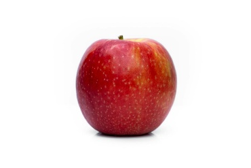
THIS
Singular + Near
This apple is fresh.
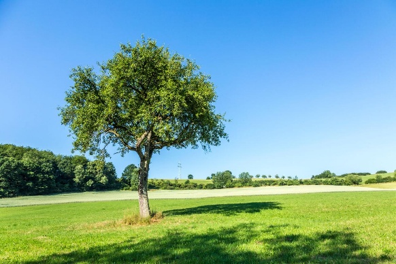
THAT
Singular + Far
That tree is tall.
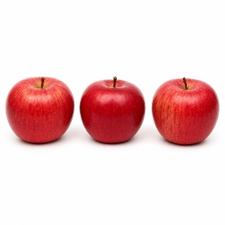
THESE
Plural + Near
These apples are fresh.
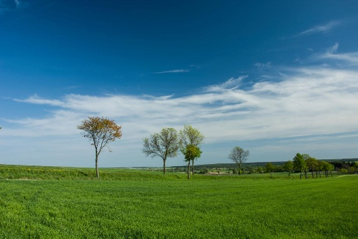
THOSE
Plural + Far
Those trees are tall.
Easy trick to remember:
- This → These: singular changes to plural.
- That → Those: singular changes to plural.
- This/These: things near the speaker.
- That/Those: things farther from the speaker.
Distance may be physical, or it may refer to something psychologically or conversationally distant.
Important Rules of Demonstrative Determiners
| Rule | Explanation | Correct Example |
| Rule 1: Singular nouns | This and that are used before singular countable nouns. | This girl is intelligent. |
| Rule 2: Plural nouns | These and those are used before plural nouns. | Those girls are intelligent. |
| Rule 3: Near objects | Use this for one nearby item and these for multiple nearby items. | This chair is comfortable. |
| Rule 4: Distant objects | Use that for one distant item and those for multiple distant items. | Those buildings are old. |
| Rule 5: Verb agreement | The verb must agree with the noun or subject’s number. | This is my book. / These are my books. |
| Rule 6: Before adjectives | A demonstrative can come before an adjective and a noun. | Those beautiful birds are singing. |
| Rule 7: Before uncountable nouns | This and that can be used with uncountable nouns. | This water is cold. / That information is useful. |
| Rule 8: No article together | Do not normally use a, an, or the immediately before a demonstrative determiner. | This book, not the this book. |
| Rule 9: Identification | Demonstratives can distinguish one item from another. | I prefer this dress to that dress. |
| Rule 10: Time reference | This can refer to the present period; that can refer to a past or more distant period. | This week is busy. / That day was memorable. |
Demonstrative Determiners vs Demonstrative Pronouns
This is one of the most important grammar and competitive-exam concepts. The same four words can function as either determiners or pronouns. Their function depends on how they are used in a sentence.
| Basis | Demonstrative Determiner | Demonstrative Pronoun |
| Position | Comes before a noun | Replaces a noun; stands independently |
| Function | Specifies a noun | Refers to a person or thing without repeating its noun |
| Example with this | This book is mine. | This is mine. |
| Example with that | That boy is my brother. | That is my brother. |
| Example with these | These mangoes are sweet. | These are sweet. |
| Example with those | Those shoes are expensive. | Those are expensive. |
Exam rule: If a noun follows the demonstrative, it is generally a determiner. If the demonstrative stands in place of the noun, it is a pronoun.
Compare:
- These students are hardworking: These is a determiner.
- These are hardworking students: These is a pronoun.
Demonstratives and Subject–Verb Agreement
| Incorrect Sentence | Correct Sentence | Reason |
| This are my books. | This is my book. / These are my books. | Singular and plural forms are mixed. |
| These is my friend. | This is my friend. / These are my friends. | These requires a plural noun in this use. |
| Those boy is clever. | That boy is clever. / Those boys are clever. | Those takes a plural noun. |
| This information are useful. | This information is useful. | Information is uncountable. |
| These furniture is expensive. | This furniture is expensive. | Furniture is uncountable. |
Demonstrative Determiners with Countable and Uncountable Nouns
| Noun Type | Singular / Uncountable | Plural |
| Countable noun | This chair / That chair | These chairs / Those chairs |
| Uncountable noun | This milk / That milk | Not normally pluralised as milks when referring to milk generally |
| Abstract noun | This idea / That idea | These ideas / Those ideas |
| Information | This information / That information | These pieces of information / Those pieces of information |
Remember that ‘this and that’ can be used with uncountable nouns because they are grammatically treated as singular.
Determiners: Exam Traps and Common Errors
| No. | Question / Incorrect Form | Correct Answer | Explanation |
| 1 | ___ boy is my cousin. (near, singular) | This | Singular and near. |
| 2 | ___ stars are shining brightly. (far, plural) | Those | Plural and far. |
| 3 | These book is mine. | This book is mine. | Singular noun requires this or that. |
| 4 | That apples are fresh. | Those apples are fresh. | Plural noun requires these or those. |
| 5 | This are very useful. | These are very useful. | Use these with a plural reference and plural verb. |
| 6 | Those is my classroom. | That is my classroom. | Singular reference. |
| 7 | This information are correct. | This information is correct. | Information is uncountable. |
| 8 | The these flowers are beautiful. | These flowers are beautiful. | Do not place the directly before a demonstrative determiner. |
| 9 | I like these more than that. | Correct if comparing plural items with one item. | The two demonstratives need not have the same number if the intended comparison is clear. |
| 10 | This is my pen. | Correct. | This functions as a demonstrative pronoun because no noun follows it. |